Outlet Covers 101: Types, Safety, and Style
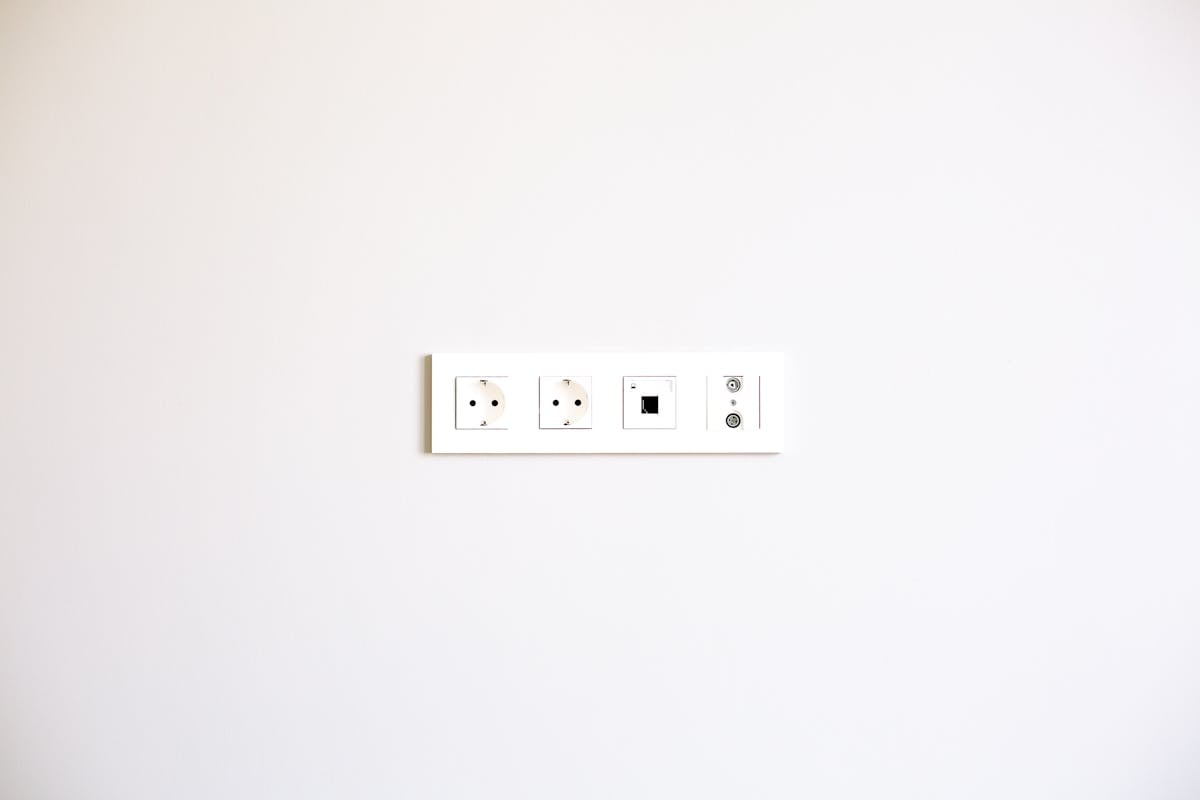
Photo by La Miko, Pexels License
“Outlet cover” means several different products depending on what problem you’re solving — safety, style, or cable clutter. Here’s the difference, since buying the wrong type is a common and easily avoidable mistake.
Standard Flat Covers
This is what ships with most homes: a flat plastic or metal plate with cutouts for the outlet and a center screw. Its only job is covering the wiring box. No cavity, no safety mechanism, purely functional.
Decorative Covers
Same flat design, different materials and finishes — brushed metal, wood-look, colors that match a specific wall paint. These exist purely for style and don’t change how the outlet functions at all.
Child-Safety Covers
Sliding-plate covers stay attached to the wall and only expose the outlet when you actively push a plug in and slide the cover open, unlike simple plug-in caps that can be pulled out entirely. If there are small children in the house, this category matters more than any other on this list — see our full childproofing checklist for room-by-room guidance.
Cable-Management Covers
This is the newer category: a deeper plate with a built-in cavity behind it, designed to hold plug heads and slack cord out of view. The Refiner cable management outlet cover is a straightforward example — same install as a standard cover, but it actually does something about the mess around the plug instead of just framing it.
How to Pick
Match the cover to the actual problem at that specific outlet:
- Outlet behind furniture, purely functional → standard cover, don’t overspend
- Outlet within reach of a small child → sliding-plate safety cover
- Outlet with visible cord clutter (desk, nightstand, counter) → cable-management cover
- Outlet in a highly visible spot where finish matters → decorative cover
One Cover Doesn’t Have to Do Everything
It’s tempting to look for a single product that’s safe, stylish, and manages cables all at once. In practice, most outlets only have one real problem to solve at a time — pick the category that matches the actual issue at that specific outlet rather than over-buying for a problem you don’t have there.