Kitchen Counter Cable Management for Small Appliances
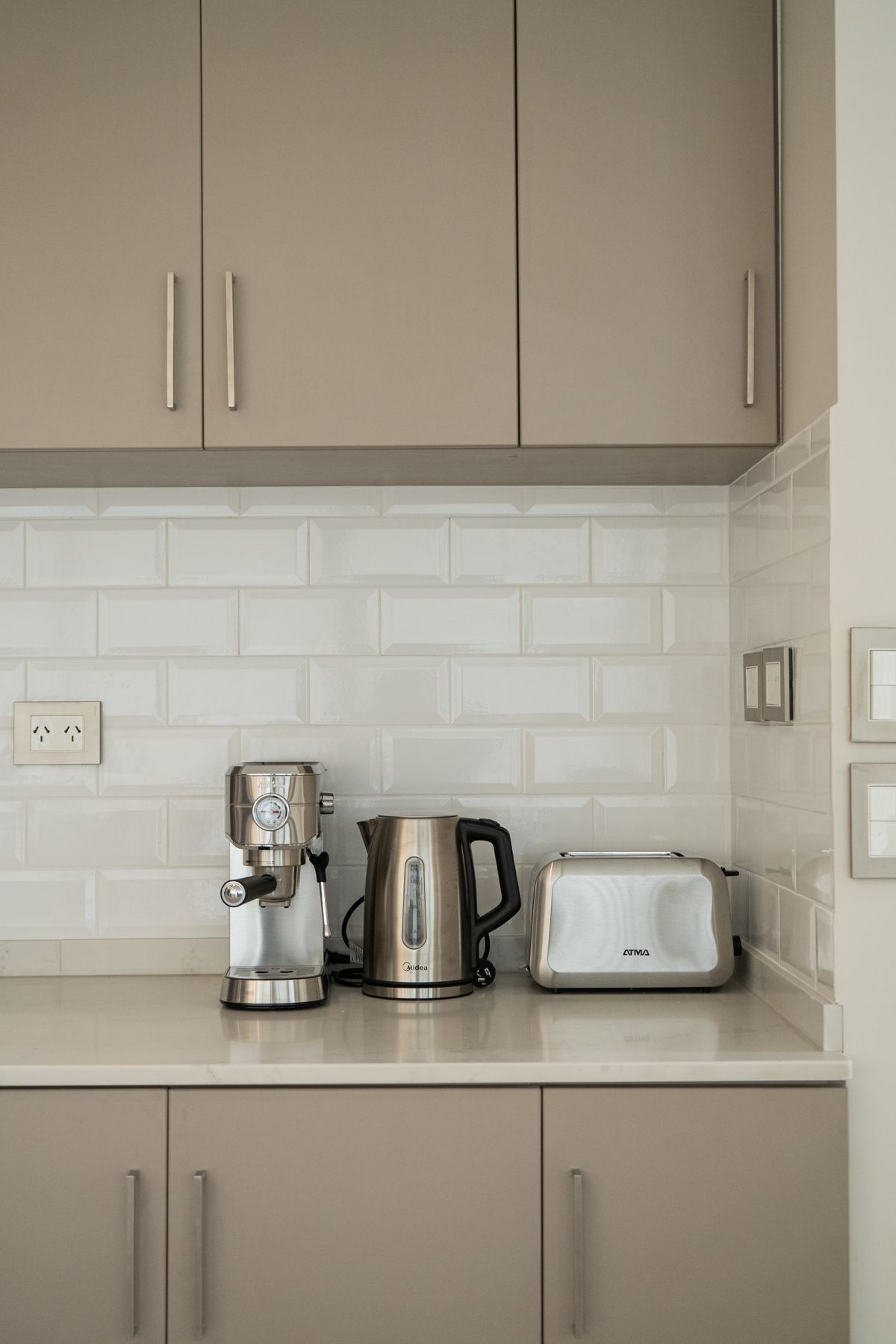
Photo by Antonio Buljubasich, Pexels License
Kitchen counters are one of the few spaces where cable management collides directly with food prep, cleaning, and daily use — a coffee maker, a kettle, and a stand mixer cord all competing for counter space and outlet access, usually right where you need to wipe down the surface.
Identify What Actually Stays Plugged In
Most kitchens have one or two appliances that live plugged in permanently — typically a coffee maker or an always-ready kettle — versus appliances used occasionally and unplugged after, like a stand mixer or blender. Only the permanent ones need a real cable-management solution; the occasional ones just need a place to coil the cord when stored.
Keep Cords Off the Counter Surface
A cord lying across the counter is both a clutter problem and a genuine hygiene one — it’s in the path of spills, crumbs, and cleaning wipes. Route the permanent appliance’s cord along the backsplash edge rather than across open counter, using a low-profile adhesive clip rated for kitchen use (check it can handle occasional moisture).
The Outlet Behind the Appliance
This is where a wall outlet cover for cable management earns its place in a kitchen specifically: an appliance that’s always plugged in has cord slack sitting right at the outlet, right at counter height, right in your eye line. A deeper cover with a built-in cavity keeps that slack contained instead of bunched up behind the coffee maker.
What Not to Do in a Kitchen
Skip fabric cable sleeves and non-rated adhesive products near the stove, sink, or anywhere splash is likely — kitchens have different durability and safety requirements than a desk or living room, and a product that works great at a nightstand may not hold up to kitchen conditions.
A Simple Rule
If an appliance’s cord is visible every time you look at that section of counter, it’s worth the small investment to manage it properly. If it’s an appliance you use twice a month and store afterward, don’t over-solve a problem that’s only visible occasionally — a simple cord wrap for storage is enough.